
Fear of Flying: When the Journey Feels Bigger Than the Destination
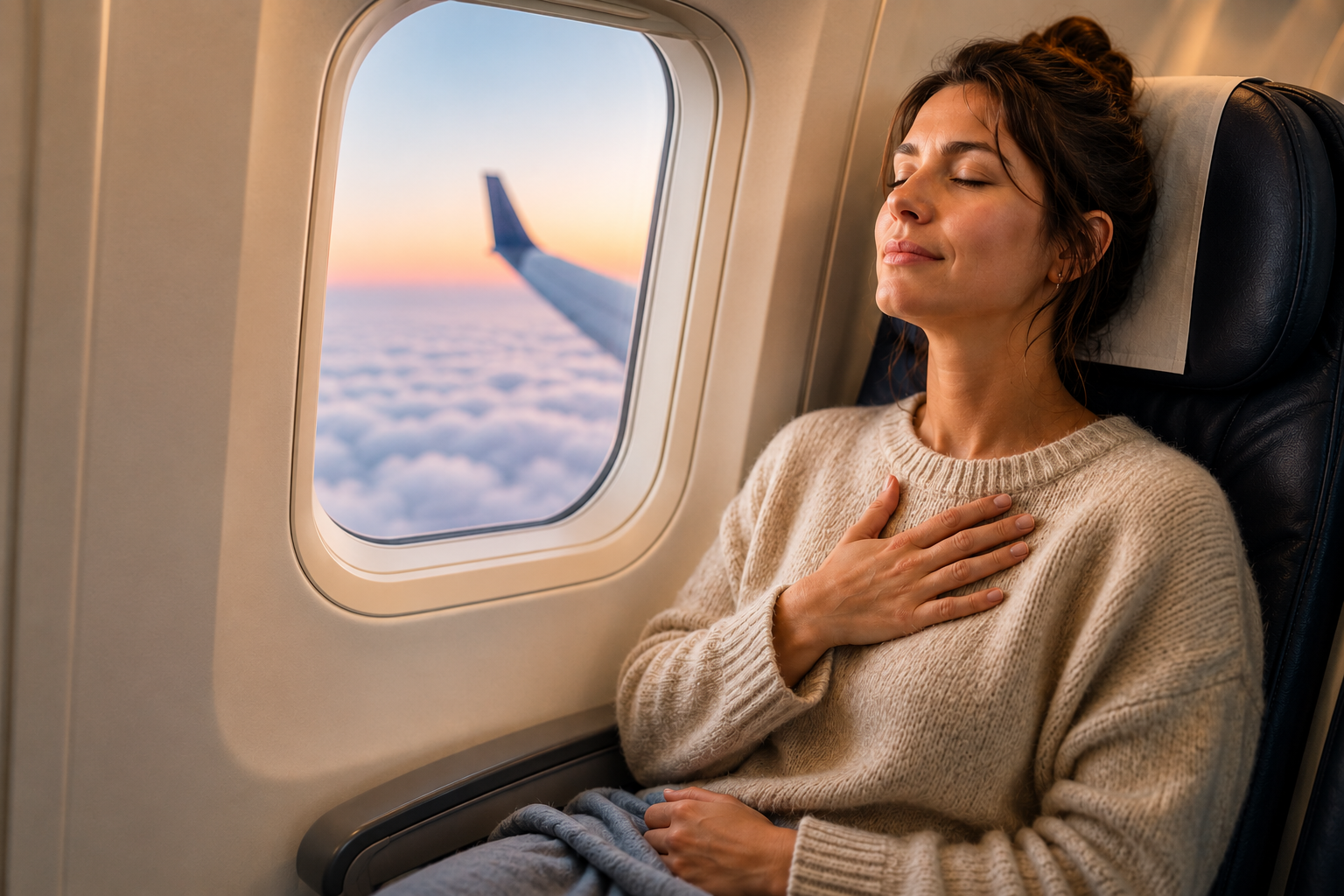
Fear of flying is not always only about the flight.Sometimes it starts days or weeks before travelling.
You may notice yourself thinking about take-off, turbulence, the cabin doors closing, or what might happen if panic appears and you cannot easily get out.
You may find yourself checking the weather, avoiding booking the ticket, choosing seats carefully, asking for reassurance, or imagining the journey again and again before it has even happened. For many people, fear of flying is closely connected to control.
On the ground, you can usually pause, leave, move around, change your mind, or find a way to feel safer. On a plane, those choices can feel limited. You are not driving. You are not in charge of the route. You cannot simply step outside.
Even when part of you knows that flying is common and safe, your body may still respond as if something is wrong.That does not mean you are weak. It may mean your nervous system is trying to protect you from uncertainty, panic, feeling trapped, or feeling out of control.
When the journey begins before the airport
Fear of flying often starts before the actual flight. It might begin when you book the ticket, receive the confirmation email, pack your suitcase, travel to the airport, wait at the gate, or hear the announcement to board.
By the time you sit down on the plane, your body may already be carrying hours, days, or weeks of anticipation. You might feel tense, restless, nauseous, hot, tearful, disconnected, or very alert to every sound and movement around you. You may feel embarrassed, especially if the people around you seem calm. And sometimes the fear is not only about the plane.
It may be the fear of panicking. The fear of being seen. The fear of losing control. The fear of being stuck with your own fear and not knowing how to soothe it.
Finding small areas of control
You may not be able to control the plane, the weather, the sounds, or every sensation in your body. But you can begin to notice what is still available to you. You can choose how you prepare. You can choose what you bring with you. You can choose where you place your attention. You can choose to soften your body slightly. You can choose to take the flight one stage at a time, rather than asking yourself to manage the whole journey at once. This is not about pretending everything feels fine. It is about helping your nervous system remember that even in a situation that feels limited, there are still small moments of choice.
Working with the fear response
When anxiety rises, the body can move into alarm.
Your heart may race.
Your chest may tighten.
Your breathing may change.
Your stomach may drop.
You may feel an urge to escape, even when escape is not possible in that moment.
This can feel frightening, but it can also be understood as your body trying to protect you.
Rather than fighting the sensations, you might begin by grounding yourself in what is immediate.
The seat underneath you.
Your feet on the floor.
The texture of your clothes.
The sound of your breath.
One colour you can see.
One slower exhale.
You do not need to calm your whole body at once.
Sometimes it is enough to give your body one small signal that you are still here.
How hypnotherapy can help
Hypnotherapy can help you work with the fear of flying before the journey, not only during the flight itself.It can support the mind and body to rehearse a different experience: arriving at the airport, boarding the plane, noticing anxiety, and still feeling more prepared and connected to yourself. This does not mean forcing yourself to be calm.It means learning how to meet fear differently, so it does not have to take over the whole experience.Over time, hypnotherapy can help you build more trust in your body, more confidence in your ability to cope, and more choice in moments that previously felt overwhelming.
Rebuilding self-trust
For many people, the deeper work is not only about trusting the plane. It is also about trusting yourself. Trusting that you can feel anxious and still cope.Trusting that your body can become activated and settle again. Trusting that panic, although uncomfortable, does not mean you are unsafe. Trusting that you do not have to face the experience with shame. Progress may not mean feeling completely fearless. It may mean noticing that you feel a little more prepared. A little more steady. A little more able to stay with yourself.
A gentle reminder
Fear of flying is not something to feel ashamed of. It can be connected to panic, claustrophobia, fear of losing control, previous experiences, or the vulnerability of being somewhere you cannot easily leave. You do not need to become fearless. Sometimes the aim is gentler than that. To feel more prepared. To feel more supported. To feel more able to take the journey one step at a time. If you are struggling with fear of flying, panic, claustrophobia, fear of driving, or phobias, you are welcome to get in touch for an introductory conversation.